

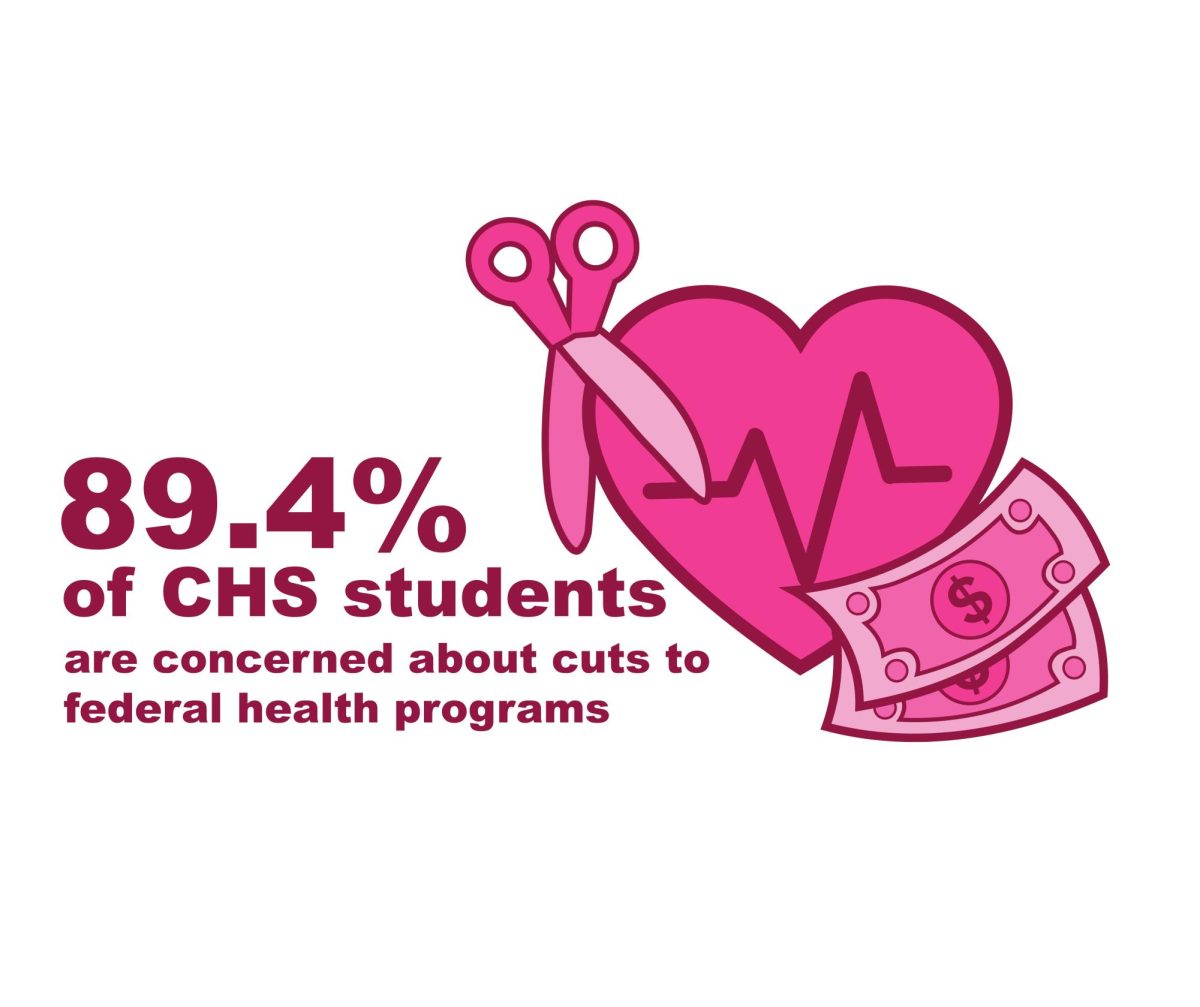
In a time of rising prescription prices and economic recession, many lower-income Americans rely on federal programs, which are being cut faster than those who need them can keep up.
In 2023, the United States Census Bureau found that 37.8% of Americans relied on Medicare or Medicaid. Both programs provide coverage for medical visits, hospitalizations, prescription costs and long-term care; Medicare covers individuals aged 65 and older, while Medicaid serves low-income individuals. These populations are now at risk of losing access to healthcare due to legislation being introduced by President Donald Trump’s Administration.
Trump started using the phrase “One Big Beautiful Bill” in January 2025, and it became a popular nickname for a controversial budget reconciliation act. Officially known as Public Law 119-21, the bill has been central to Trump’s second term, contributing to a partisan divide in Congress that led to a Federal Government shutdown. Signed into law on July 4, 2025, the One Big Beautiful Bill Act (H.R. 1) focuses heavily on tax cuts and reductions, as well as on changes to administrative requirements for programs such as Medicaid and health insurance under the Affordable Care Act.
The bill institutes a policy that participants in Medicaid must, monthly, work or participate in a work program for at least 80 hours, complete that many hours of community service, be enrolled at least half-time in an educational program or engage in any combination thereof for a total of at least 80 hours.
Some support this, arguing that policies like this one, which make Medicaid more complicated to access, will benefit the public by preventing people from abusing the system.
On the other hand, people such as Communications High School (CHS) junior Avery Velho of Middletown are concerned about how these cuts may affect Americans who use the system properly.
“It’s just really terrible seeing a lot of people fall victim to debt, especially in the medical field, because it’s just so insanely high for some care,” Velho said.
Further restrictions are being implemented regarding citizenship. Chapter 2, subchapter A, states that Medicare eligibility will generally be restricted to U.S. citizens, lawful permanent residents, Cuban-Haitian entrants and Compact of Free Association migrants lawfully residing in the United States. This bill excludes currently protected groups, such as refugees, asylees and those with Temporary Protected Status, denying them access to federally assisted health care.
Reactions to these restrictions are divided. Some argue that American citizens’ taxes shouldn’t go to non-citizens, while others, like junior Emily Ye of Tinton Falls, argue otherwise.
“[Medicaid] shouldn’t be limited to certain people,” Ye said.“If they need it, they should get it. It’s a human right.”
In addition to the new requirements regarding citizenship and service, the bill makes a 15% reduction in Medicare spending, amounting to nearly $1 trillion over the next 10 years. According to The Guttmacher Institute, “The Congressional Budget Office estimates that [the bill] will lead to 10 million more uninsured people by 2034, including 7.5 million people excluded from Medicaid coverage.”
A common argument in favor of Medicaid cuts is that people shouldn’t have to pay for other people’s health insurance. Rumson-Fair Haven Regional High School junior Reagan Gaborow of Fair Haven argues that cutting federal health care leads to higher costs for all in the long run.
“If [people] are only going for emergency visits and they have no healthcare, then, costs are still covered by the hospital itself and once costs… build up [they] also build up on the patients who come in later,” Gaborow said. “What people don’t realize when they’re cutting health care is that they’re increasing the healthcare insurance rates for themselves.”
With rising health insurance premiums and revenue losses from the largest Medicaid cuts in history, many states are scrambling for a plan of action.
In the past, to reduce inflationary healthcare costs, states have attempted to eliminate benefits, reduce provider reimbursement rates, and introduce cost-sharing for enrollees. When evaluated, these changes were found to heighten medicaid disenrollment, worsen health outcomes, increase reports of medical debt and decrease the use of primary care.
In the past few months, Governor Little of Idaho and Secretary Devdutta Sangvai of North Carolina have announced that they will reduce the payments providers receive for services by 3% to 10%, with some reductions varying by service and provider type. Colorado, on the other hand, will suspend the Medicaid rate increases that went into effect in July.
Former state health secretaries have predicted that states might cut optional benefits, a trend now evident in Colorado, where spending on dental insurance is being reduced, and in North Carolina, which anticipates service and staff cuts. Such actions are expected in 2026 when state legislatures convene.
Across states, time and budget cuts, federal health insurance has become a highly partisan issue, with a pronounced divide along the political spectrum: right-leaning politicians garner support by favoring Medicaid cuts, and vice versa. Despite this divide, Americans strive to find a solution.
“I feel like people want to politicize it so much, but at the end of the day, healthcare should be a human right,” Velho said. “I feel like there really shouldn’t be a party divide at all [when it comes to this].”