
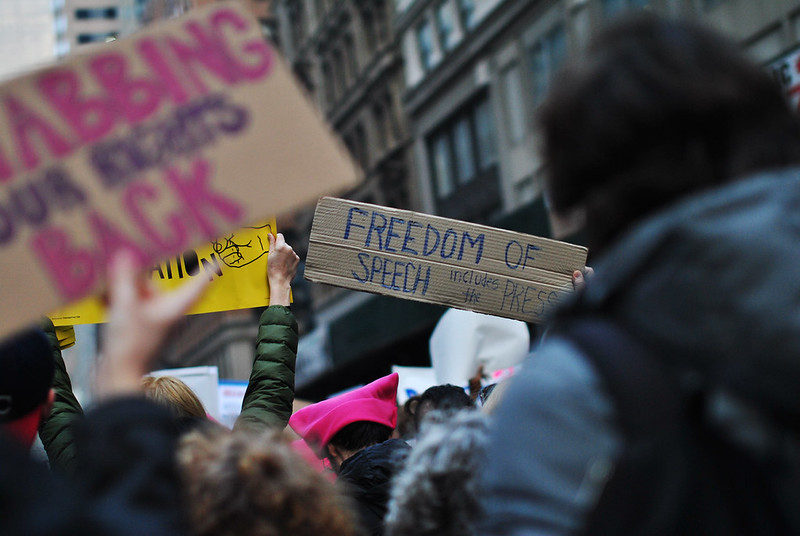
In today’s world, expressing one’s opinion is both a right and a risk.
At Communications High School (CHS), one word, in class or online, can ignite backlash. This leaves students wondering: When is it safe to speak your mind?
Many students feel like they are walking a tightrope while sharing their thoughts in school, balancing their true opinions with the fear of a negative response from their peers. This often creates a hostile environment where only one side of a controversial issue is heard.
Instead of engaging in discussions among peers, these students resort to posting their beliefs online, discouraging thoughtful debate and reinforcing existing biases.
“I feel it’s a lot easier to share your opinions on social media because you don’t have that face-to-face interaction,” junior Brynn Hughes of Wall said. “You’re hiding behind a screen.”
People are scared to be judged if they speak their mind in person, but feel more confident when they are masked by their online identity. While this digital safety net can make online conversations feel easier, it strips away the nuance that comes from tone, body language and real-time back-and-forth dialogue.
A Pew Research study found that 69% of Americans say that “the internet and social media have made people less civil in how they talk about politics.” This decline in civility can make students hesitant to share their own opinions due to the fear of being attacked or misunderstood.
“A lot of people post their opinions without knowing the full story,” said junior Alexandra Marmut of Tinton Falls. “With social media, you are expressing yourself to a much larger audience than you would in person, making it easier for you to receive backlash.”
While social media may feel like a safer place to share opinions, this protection may be misleading. Even online, many are still vulnerable to online arguments and confrontational exchanges.
Posting to a larger, often unfamiliar audience increases the risk of scrutiny, especially when opinions are expressed without context. This demonstrates the double-edged nature of online expression, offering confidence but exposure to conflicts.
The fear of consequence illustrates how free speech—while instrumental in helping society remain successful and free—also carries responsibilities and risks.
The right to speak freely does not mean individuals should speak without thought; it means choosing the right time, place and approach. Students should feel empowered to express their beliefs but also remain mindful of how their words affect others.
The challenge for CHS is clear: students must move beyond hiding behind silence and screens and learn to use free speech responsibly, turning debates into opportunities for understanding rather than division. After all, as Bob Marley once said, “Free speech carries with it some freedom to listen.”